Supreme Court Dinner — First Case
A beginner's courtroom debate — simpler steps and fewer props, perfect for younger kids trying their first case.
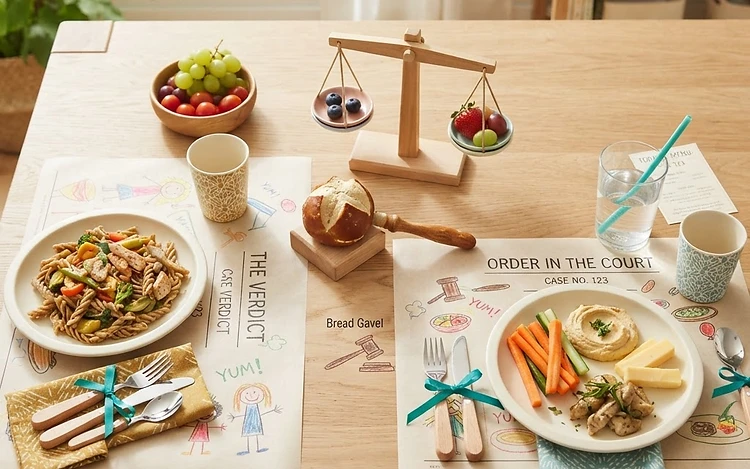
A great introduction to legal role-play for younger kids: the Supreme Court Case Dinner. Choose a case — perhaps something timely or relevant — and create your own version by researching and arguing the opposing sides during the week. On the final dinner, the court's members make their decision, then the family compares their verdict with the actual ruling and discusses the outcome. Ready for a tougher version? Try the Supreme Court Dinner Challenge for older teens.
Take breaks when needed according to the attention span of your children and your own. When this endeavor becomes a chore, the positive aspects of learning are lost. The point is to bond and learn surprising things from, and with, your family.
Gather Your Supplies
The Provisions
Props
- A small wooden gavel (or a makeshift one)
- A leather-bound book or folder as the "case docket"
- Scrolls or notepads for each counsel to build their argument
- A simple robe or sash for the Justices to wear at the final dinner
Recipes & Food
- A dignified, multi-course meal the Justices can deliberate over
- Bread to "break" after the verdict is rendered
- Cider or sparkling water served in goblets
Language & Music
- Legal terminology: counsel, objection, sustained, overruled, majority opinion, dissent
- Research the real Justices and their judicial philosophies
- Practice formal courtroom address — "Your Honor," "counsel for the plaintiff"
Peripherals
- Printed summary of the chosen case (with the real ruling hidden until the end)
- Task worksheet to post on the fridge
- A timer for opening and rebuttal statements
Your Week of Wonder
The Five-Day Itinerary
Monday
Choose the Case & Assign Roles
- Divide family members into three roles: counsel to argue for the chosen case, counsel to argue against, and the remaining members as the "court" who will vote based on the arguments presented.
- The Justices should not research the actual ruling so they won't be influenced — instead, they research their roles as Justices to understand their expected performance.
Tuesday
Research Begins
- Counsel for each side researches the facts, precedent, and the strongest arguments for their position.
- The Justices research the real Supreme Court — its traditions, how oral argument works, and how opinions are written.
Wednesday
Build the Arguments
- Each counsel drafts an opening statement and a list of key points.
- Justices prepare thoughtful questions to ask during oral argument.
Thursday
Rehearsal Dinner
- Run a dry rehearsal of oral argument at the dinner table. Time each side. Let the Justices practice asking their questions.
- Finalize costumes, the docket, and the gavel for the final dinner.
Friday
Court Is Now in Session
- The final dinner is the hearing. Counsel presents opening statements, the Justices ask questions, and each counsel offers rebuttal.
- The Justices retire to deliberate, then render their verdict and write a short majority opinion (and a dissent, if any).
- Reveal the actual ruling. Compare your family's verdict with the real one and discuss the outcome together over the meal.

