Detective Mystery Dinner
A dinner party with a twist — clues, suspects, and a mystery to solve before dessert.
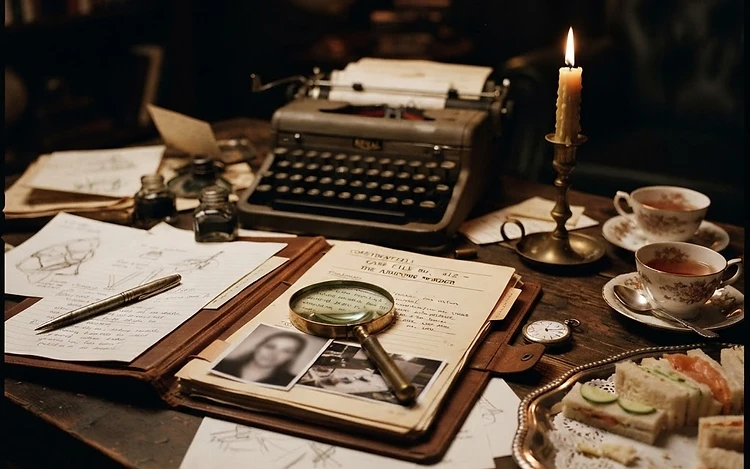
Turn your dinner table into a scene from a detective novel. A Detective Mystery Dinner combines storytelling, logic, and food in a way that's perfect for preteens. During the week, the family builds a mystery together — choosing a crime, creating suspects, and planting clues. At the final dinner, everyone becomes a detective, following the clues to crack the case before dessert is served. It's a thrilling way to practice deduction, creative writing, and problem-solving.
Take breaks when needed according to the attention span of your children and your own. When this endeavor becomes a chore, the positive aspects of learning are lost. The point is to bond and learn surprising things from, and with, your family.
Gather Your Supplies
The Provisions
As an Amazon Associate we earn from qualifying purchases at no extra cost to you.
Props
- A "case file" folder with a handwritten mystery scenario
- Index cards for clues — one per clue, hidden around the house
- A magnifying glass (real or toy) for the lead detective
- Notepads and pencils for each detective to take notes
- A "crime scene" prop — a stolen object, a "poisoned" cup, or a missing item
- Optional: a trench coat, hat, or magnifying glass for dressing the part
Recipes & Food
- Finger sandwiches (cucumber, ham, cheese) — classic detective-tea fare
- A pot of soup or stew for the main course
- Tea and biscuits (cookies) for a British detective vibe
- A "mystery dessert" — cupcakes with hidden filling, or a cake decorated with a question mark
Language & Music
- Learn detective vocabulary: suspect, alibi, motive, clue, deduction, evidence, witness
- Practice making deductions: "If X is true, then Y must also be true because…"
- Discuss famous fictional detectives: Sherlock Holmes, Hercule Poirot, Nancy Drew
- Practice taking notes like a detective — observe and write down details
Peripherals
- Task worksheet to post on the fridge
- A family-friendly mystery movie or book for movie night (e.g., Clue, Nancy Drew)
- A printed mystery puzzle or brain teaser for each day
- Optional: a simple detective board with string connecting clues (like in the movies)
Your Week of Wonder
The Five-Day Itinerary
Monday
Build the Mystery
- Introduce the theme. Together, invent a mystery: What was stolen or happened? Who are the suspects (family members, fictional characters, or stuffed animals)? What is the motive?
- Write the mystery scenario in the case file. Keep the solution secret — only the "detective chief" (a parent) knows the answer.
- During dinner, discuss what makes a good mystery story and learn detective vocabulary: suspect, alibi, motive, clue.
Tuesday
Create the Suspects & Alibis
- Each family member creates a suspect character: a name, a personality, a relationship to the crime, and an alibi (where they were when it happened).
- Write each suspect on an index card with their alibi. One suspect is guilty — their alibi has a flaw the others don't.
- During dinner, each person introduces their suspect character in character. Discuss who seems most suspicious and why.
Wednesday
Plant the Clues
- The detective chief writes 5–7 clues on index cards. Each clue should point toward the guilty suspect without giving it away immediately (e.g., "The culprit was seen near the kitchen at 6 PM" — and only one suspect's alibi puts them there).
- Hide the clue cards around the house. Don't reveal where yet — they'll be found on Friday.
- During dinner, read a mystery story together or watch a detective show. Discuss how the detective used clues to solve the case.
Thursday
Detective Training & Prep
- Practice deduction with a brain teaser or logic puzzle. Discuss how detectives eliminate impossible answers to find the truth.
- Prepare the finger sandwiches and soup for tomorrow's dinner. Bake the "mystery dessert" if making from scratch.
- Set up the detective board (if using) and prepare the notepads and magnifying glass for the investigation.
Friday
The Mystery Dinner
- Set the table like a detective's parlor — case file in the center, notepads at each seat, magnifying glass for the lead detective.
- Serve finger sandwiches and tea. The detective chief reads the mystery scenario aloud and introduces the suspects.
- Release the clues one at a time. After each clue, the family discusses what it means and who it points to. Detectives take notes.
- Before dessert, each detective writes down their accusation: who did it and why. Reveal the solution — did anyone crack the case?
- Celebrate with the mystery dessert and discuss what clues gave it away (or what misled you).

